
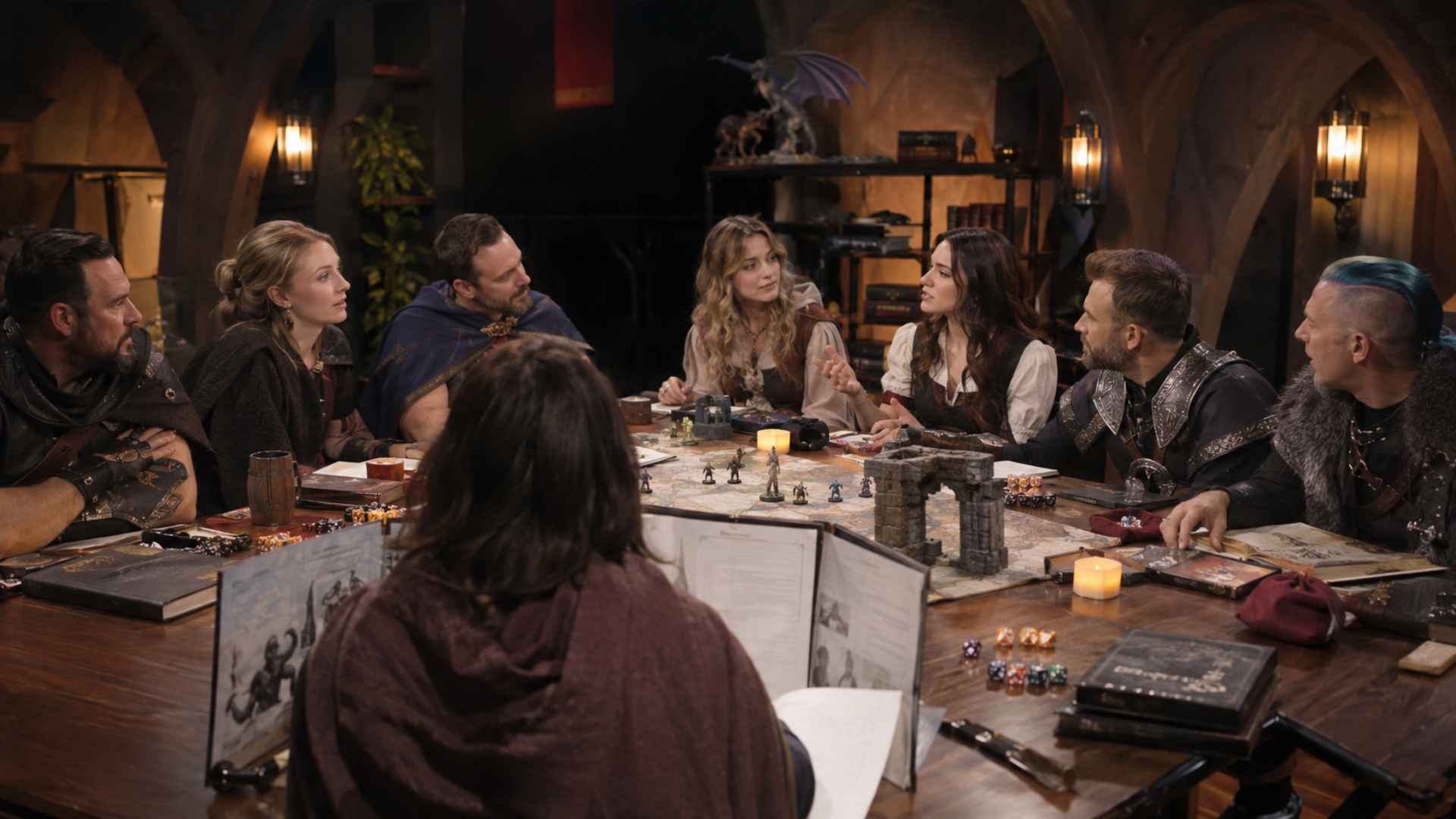
Dungeons and Dragons culture extends far beyond fantasy battles and character sheets. Since the tabletop role-playing game first appeared in 1974, players have developed shared customs around cooperative stories, imaginative problem-solving, and regular gatherings. Dice, rulebooks, and miniature figures are recognizable parts of the hobby, but the relationships formed around the table are equally important. Each group develops its own sense of humor, traditions, and expectations, which can make two campaigns based on the same rules feel remarkably different.
Central to this culture is participation rather than passive entertainment. One participant typically serves as the Dungeon Master, describing the fictional world and interpreting the rules, while others portray characters who make decisions within it. The plot is not fully determined in advance. Conversations, unexpected dice results, and player choices can redirect events in ways nobody predicted. This shared authorship distinguishes tabletop role-playing from stories with a fixed sequence and gives long-running groups a history that belongs specifically to them.
Roots of the Tabletop Role-Playing Tradition
Dungeons and Dragons was created by Gary Gygax and Dave Arneson and published in 1974. Its early design drew from miniature wargames, but placed greater emphasis on individual fantasy characters, exploration, and adventures guided by a referee. Instead of controlling entire armies, participants could develop particular heroes over multiple sessions. That shift helped establish a model for tabletop role-playing games, where fictional identities, rules, and collective imagination operate together.
The game’s culture has changed across successive editions without losing this basic format. The fifth edition launched in 2014, followed by revised core rulebooks beginning in 2024. Rules influence character abilities and conflict resolution, yet groups often adapt details to suit their preferences. These unofficial adjustments, commonly called house rules, illustrate an established feature of the hobby: players treat published material as a common framework while shaping the atmosphere and pace of their own campaigns.
Social Customs and Shared Responsibility at the Table
Regular sessions create social rituals that extend beyond the adventure itself. Players may recap previous events, exchange theories about characters, bring snacks, or preserve memorable jokes for years. Campaigns can run for a few evenings or continue much longer, depending on the group’s schedule and interests. Because participants must listen, negotiate plans, and respond to other characters, cooperation matters even when their fictional personalities disagree. Successful play is therefore not simply about defeating enemies or collecting rewards.
Many groups also hold a preliminary discussion often called session zero. Participants can agree on the campaign’s tone, scheduling arrangements, character connections, and subjects they would prefer to exclude. Some tables use safety practices such as lines and veils, which distinguish content that should not appear from content that should remain offstage. These practices are not identical across every group, but they reflect an important principle: improvisational stories work better when people understand and respect one another’s boundaries.
The Dungeon Master carries particular responsibilities, including preparing situations, portraying supporting characters, and making rulings when the rules leave room for interpretation. However, the role is not meant to control every outcome. Players contribute through their decisions and character relationships, while a twenty-sided die often introduces uncertainty into checks and attacks. An unexpected failure can become a memorable scene rather than a setback to the experience. This balance between structure and spontaneity helps explain the culture’s strong emphasis on trust and collaboration.
Media, Creativity, and the Wider Community
Public performances have broadened the visibility of tabletop role-playing. Actual-play programs present recorded or live sessions as podcasts and videos, with Critical Role and The Adventure Zone among the prominent examples. Academic research has examined actual play as a distinct form of digital media, where improvised stories also become entertainment for an audience. These productions introduce viewers to the basic rhythm of a session, although edited episodes and professional performers may create expectations that differ from an ordinary home game.
Digital tools have also altered the practical side of participation. Virtual tabletops can display maps, manage tokens, and support dice rolls, while voice and video calls let groups play across cities or countries. Online communities provide spaces to exchange homemade adventures, discuss rules, and organize sessions. In-person conventions, local clubs, and game stores continue to offer opportunities for meeting other participants. Rather than replacing the traditional table, these formats give people several ways to maintain a campaign and find fellow players.
Creative contributions form another recognizable part of Dungeons and Dragons culture. Players design character portraits, construct miniature terrain, write fictional journals, and invent settings inspired by mythology, literature, or personal ideas. Fan-made material can deepen attachment to a campaign, but participation does not require expensive accessories or acting ability. Limited free time, unfamiliar rules, and mismatched expectations can still make joining a group difficult. Welcoming communities address these obstacles through clear communication, patient introductions, and flexible approaches to play. Across changing editions and media formats, the enduring feature is a group of people building a story together.