
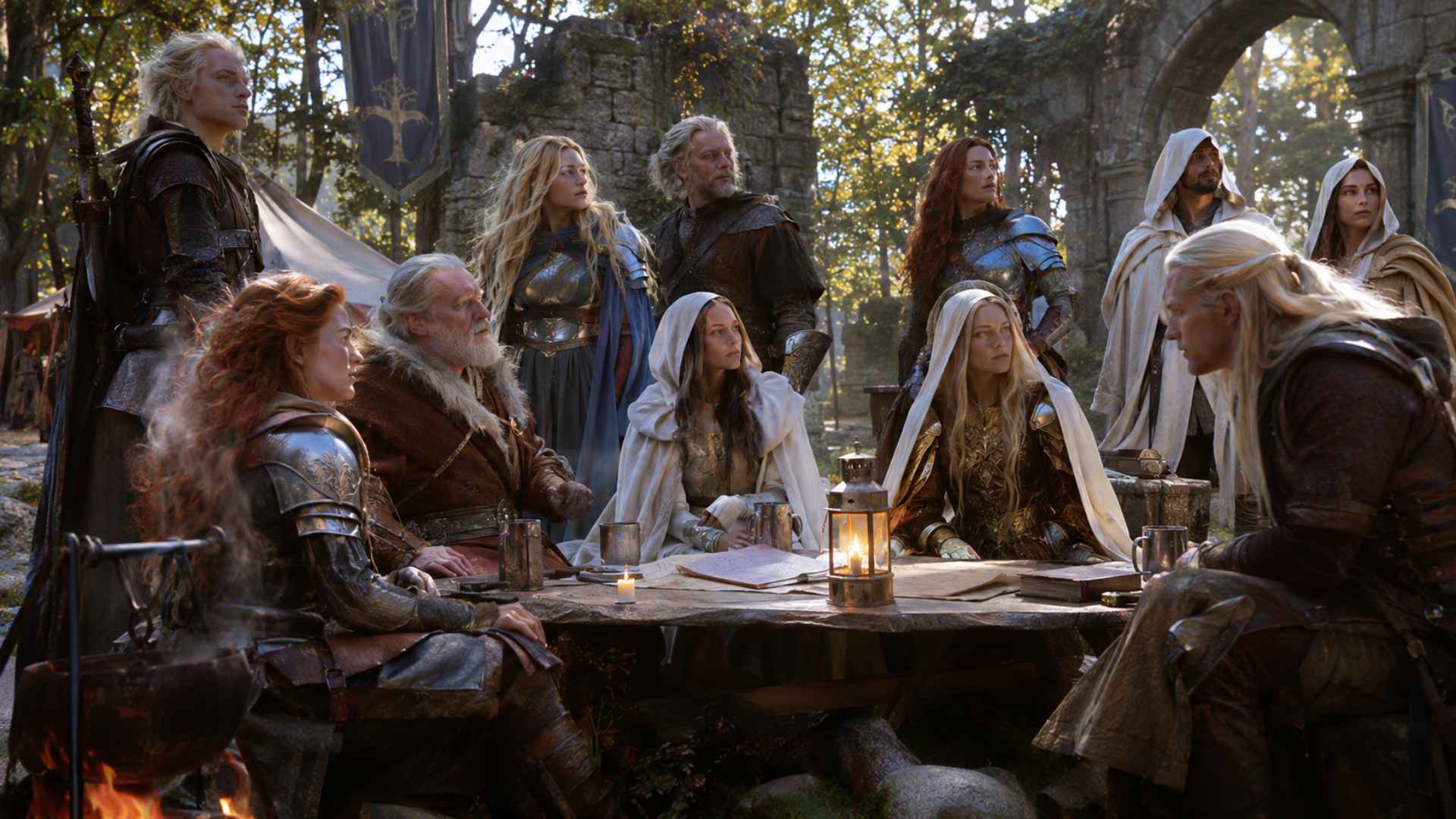
Fantasy fiction uses recognizable character roles to help readers follow unfamiliar worlds. Heroes pursue difficult goals, mentors offer knowledge, rivals create resistance, and companions provide contrasting perspectives. These patterns are often called archetypes, although the term has several meanings in literary criticism and psychology. In storytelling, an archetype is best treated as a recurring role or pattern rather than a fixed personality. Character development begins when that familiar role encounters pressures that expose individual values, limitations, and choices. The same principle applies to tabletop roleplaying games, where players contribute directly to the fate of their characters.
Characters become distinct through more than ancestry, magical ability, or combat skill. An elf might be a cautious diplomat, an ambitious apprentice, or a soldier who distrusts established authority. None of those traits follows automatically from the character’s fictional species. Similarly, a knight can be honorable yet indecisive, while a seemingly selfish thief may act with considerable loyalty. Such combinations matter because fantasy settings often contain inherited traditions, political divisions, and supernatural forces that place personal beliefs under strain. Archetypes provide a recognizable starting point, but decisions give the character an individual history.
Common Archetypes in Fantasy Stories
The hero, mentor, guardian, and trickster appear in many forms of fantasy narrative. Heroes generally carry the central conflict, although they need not be physically strong or morally flawless. Mentors pass on information or practical skills, while guardians may protect a person, place, or boundary. Tricksters disrupt expectations through deception, wit, or unconventional behavior. These roles describe narrative functions, not permanent labels. One character can occupy several roles during a story, and different characters can perform the same function at separate moments. Context determines whether a familiar figure becomes helpful, threatening, or unreliable.
Literary examples show that an archetype does not dictate personality. In J. R. R. Tolkien’s The Hobbit, published in 1937, Bilbo Baggins begins as a comfort loving hobbit who is reluctant to leave home. His journey forces him to act beyond those preferences without erasing them. Gandalf supplies guidance but does not make every decision for Bilbo. Their relationship demonstrates a useful distinction: the mentor creates opportunities for growth, while the protagonist must respond to them. Even a character identified as an antagonist requires specific aims and circumstances rather than merely representing evil.
Motivation and Conflict Across Character Arcs
Character arcs describe meaningful changes in behavior, belief, relationships, or self perception over the course of a narrative. Change does not require a complete reversal of personality. Sometimes a character retains a central conviction but learns when it causes harm. In other cases, a hero’s apparent strength becomes a liability. For example, loyalty may inspire sacrifice yet also prevent someone from admitting that a leader has betrayed the group. Both consequences can grow from the same established trait, making later decisions more coherent than a sudden personality shift introduced only to advance the plot.
External conflict gives those internal tensions a visible form. Wars, quests, political rivalries, and magical threats create conditions in which characters must choose among competing obligations. Strong development depends on consequences that connect to earlier decisions. A ruler who repeatedly protects personal allies at public expense should face different pressures from a ruler who sacrifices relationships for stability. Neither outcome is predetermined by the ruler archetype. The important distinction is between a role, which tells an audience what place a character occupies in the story, and an arc, which shows the effects of that character’s actions over time.
Character Roles and Growth in Tabletop RPGs
Tabletop roleplaying adds a mechanical layer to characterization. Dungeons & Dragons, first published in 1974, separates character abilities from the choices made during play. Its 2024 Player’s Handbook includes 12 core classes and six ability scores: Strength, Dexterity, Constitution, Intelligence, Wisdom, and Charisma. Classes such as fighter, rogue, and wizard describe broad capabilities within the game system. They do not determine whether a character is a hero, mentor, rival, or traitor. A wizard can lack good judgment, just as a fighter can serve as the group’s most thoughtful negotiator.
Backstory creates possible reasons for a character’s behavior, but decisions at the table establish what those reasons mean. Consider a fictional guard who abandoned a post during an earlier crisis. The player might portray that person as overly cautious, desperate to regain trust, or suspicious of orders. None of these reactions is mandated by the guard’s occupation. Encounters with allies and opponents can test the character’s beliefs, while dice introduce uncertain outcomes. The game master describes the setting and adjudicates events, but the player normally decides what their own character attempts.
Shared campaigns also permit forms of development that are difficult to predetermine. Relationships can change after failed plans, unexpected victories, or disagreements within the party. A character may gain new abilities without becoming wiser, or gain confidence without acquiring greater combat power. Keeping those distinctions clear prevents numerical advancement from replacing narrative change. Whether a story appears in a novel or at a gaming table, lasting characterization depends on recognizable motives, credible consequences, and room for individuals to act beyond the archetypes that first introduced them.